Recirculating Aquaculture Systems (RAS): The Complete Guide to Indoor Fish Farming
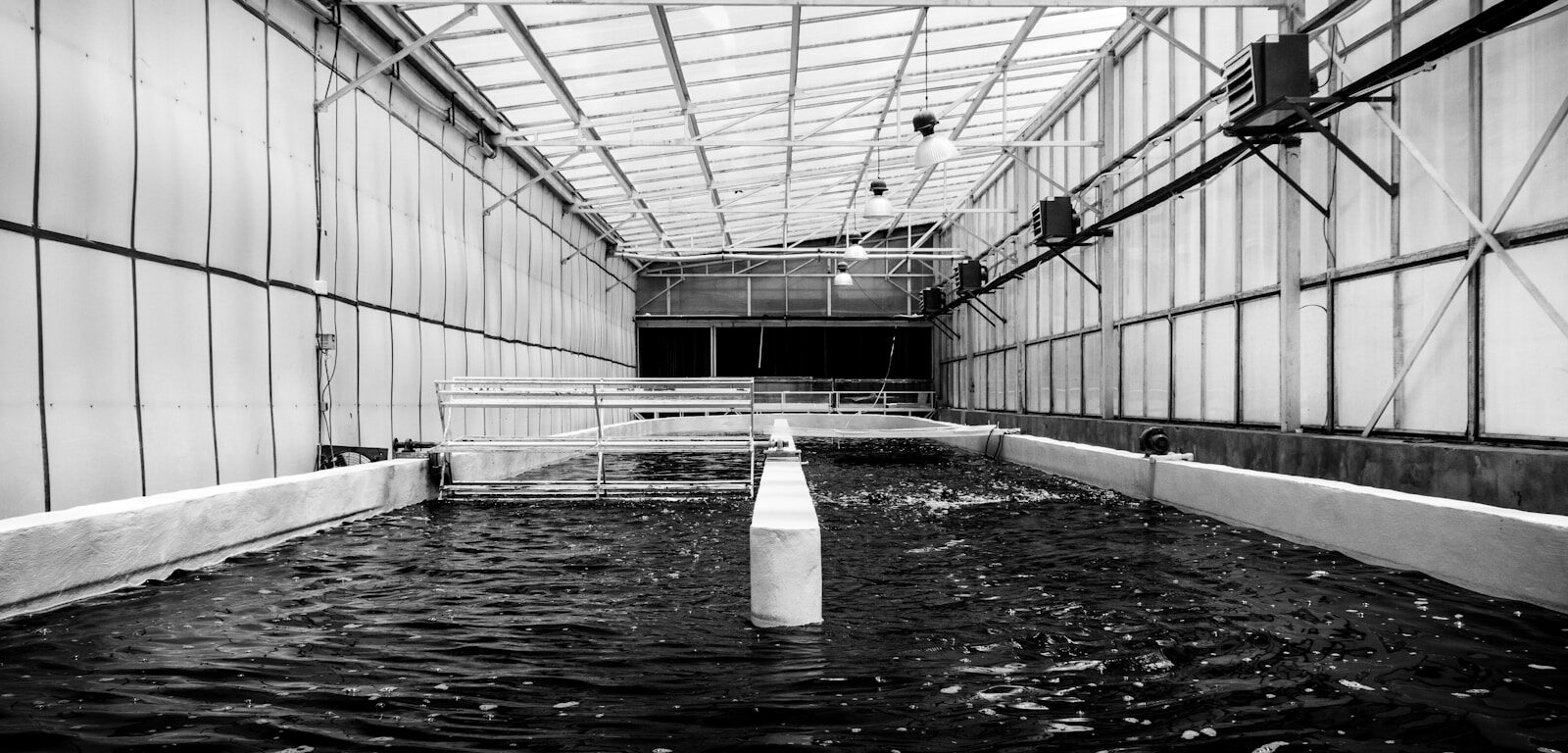
Recirculating aquaculture systems — RAS — represent the most technologically intensive end of the fish farming spectrum: enclosed, climate-controlled production environments that clean and recirculate water through biological and mechanical filtration, allowing fish to be raised anywhere with access to electricity and water regardless of climate, land availability, or proximity to natural water sources. The technology is real, proven, and increasingly sophisticated. It is also genuinely expensive to build and operate correctly, and the gap between the theoretical appeal of RAS and the economic reality of making it work profitably at small to medium scale is where most beginning operators underestimate their challenge.
How RAS Works
In a RAS, fish are held in tanks — circular fiberglass or concrete tanks are most common — and waste products from the fish, primarily ammonia, are removed through a combination of biological filtration and mechanical filtration before the cleaned water is returned to the fish tanks. The biological filter — called a biofilter — houses the nitrifying bacterial colonies that convert ammonia to nitrite and nitrite to nitrate, identical to the nitrogen cycle in an aquarium but at dramatically larger scale. The mechanical filter removes solid waste — uneaten feed and feces — before it can decompose and contribute to ammonia loading. Aeration or oxygenation maintains adequate dissolved oxygen levels throughout the system. Water exchange of 10 to 20 percent per day removes accumulated nitrate and other dissolved metabolites that biological and mechanical filtration do not remove.
The Biofilter: Your Most Critical Infrastructure
The biofilter is the heart of any RAS and the component whose failure most directly and immediately threatens fish survival. Biological filtration capacity must be sized for the maximum fish biomass and feed input the system will carry — undersized biofilters produce ammonia spikes that stress and kill fish. Biofilters require weeks to months to fully establish bacterial colonies, a cycling process identical to establishing a freshwater aquarium biological filter but at a scale where the timeline significantly affects production planning. Never stock a RAS at full density before confirming that the biofilter has established adequate nitrification capacity.
The Real Economics
A commercial-scale RAS producing 100,000 pounds of fish annually requires capital investment of $3 to $5 million or more for facility construction, tank installation, filtration infrastructure, aeration, heating, and controls. Operating costs are dominated by energy — heating water, pumping, aeration, and lighting — which can represent 25 to 40 percent of total operating costs in northern climates. The fish species, market price, production efficiency, and energy costs together determine whether the operation generates a positive return on capital. The economic case for RAS is strongest in high-value-species production (salmon, trout, barramundi, shrimp) close to premium markets where the price differential over imported product can absorb the higher production cost.
Small-Scale RAS: What Is Realistic
Backyard or garage-scale RAS systems in the 500 to 5,000 gallon range can produce meaningful quantities of fish — a well-managed 2,000-gallon system can produce 200 to 400 pounds of tilapia annually — but the economics at small scale rarely produce profitable operation when labor is valued. Small RAS are more appropriate as educational projects, food security supplements, or community-supported agriculture components than as primary commercial enterprises. If your goal is commercial fish production, pond culture or larger-scale RAS are more economically viable paths.