Aquaponics System Design: How to Build and Manage an Integrated Fish and Plant Production System
An aquaponics system that functions well is an engineering achievement built on a clear understanding of the biological requirements of both the fish and the plant components and the engineering requirements of managing them in an integrated system. Most failed aquaponics operations trace their failure to one or more design errors made before the system was ever stocked — undersized biofilters, inadequate water exchange rates, poor component balancing between fish biomass and plant production area, or species combinations that are biologically incompatible. Getting the design right before building is worth more than any amount of operational adjustment after the fact.
The Fish-to-Plant Ratio
The fundamental design parameter in aquaponics is the ratio between fish stocking density and plant growing area. Too many fish relative to plant area produces excess ammonia and nitrate accumulation that the plant component cannot absorb, leading to water quality degradation. Too few fish relative to plant area produces insufficient nutrients for plant growth. The commonly cited guideline of 0.5 to 1 pound of fish per 5 to 10 gallons of system water capacity, paired with approximately 1 square foot of growing area per gallon of fish tank volume, is a starting point that requires adjustment based on your specific species, plant types, and system configuration. Track water chemistry closely during the first production cycle and adjust the fish-plant balance based on actual ammonia, nitrite, and nitrate readings rather than theoretical guidelines.
Biofilter Design and Sizing
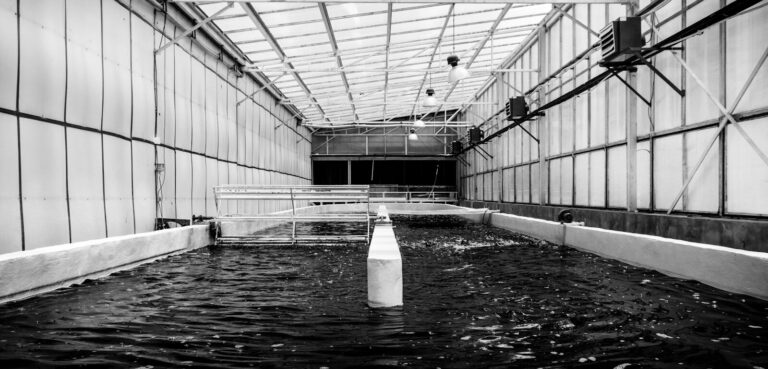
The biofilter must be sized for the maximum fish biomass and feed input the system will carry at peak stocking. Undersized biofilters are the most common design error in small aquaponics systems built without reference to proper biofilter sizing calculations. The media-based biofilter (gravel or expanded clay pellets) in a flood-and-drain grow bed can serve a dual function as both biofilter and plant growing media — the bacterial colonies colonize the media surface while the plant roots provide additional surface area and the plant uptake contributes to nutrient removal. This flood-and-drain media bed configuration is the most appropriate for small-scale aquaponics and simplifies system management compared to separate biofilter and plant growing components.
Fish Species for Aquaponics
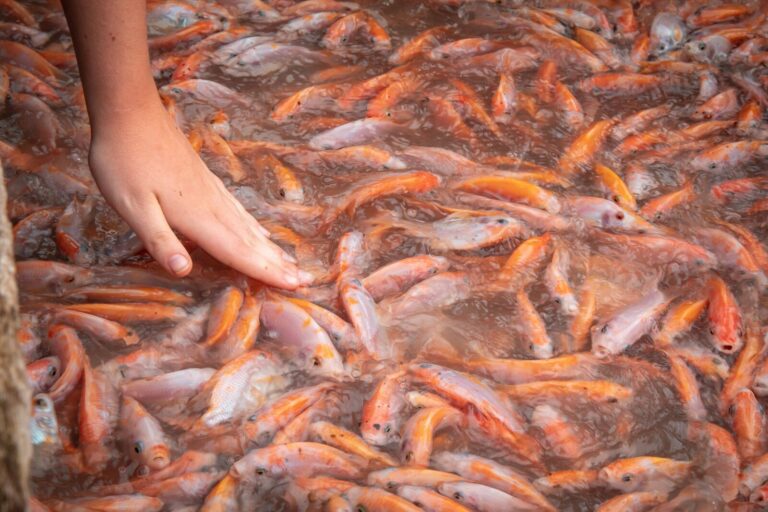
Tilapia is the most commonly recommended fish for aquaponics because it tolerates the water quality variations and temperature fluctuations that occur in systems still being balanced, and because it grows rapidly enough to provide consistent nutrient loading to the plant component. Trout can be used in cold-water systems but require more precise water quality management. Catfish are suitable and are the preferred species for aquaponics operations in the southeast US. Ornamental fish like koi and goldfish are sometimes used in systems where the fish are not intended for consumption — the marketing appeal of koi aquaponics for ornamental plant production has some following.