Fish Farm Financial Planning: The Numbers Every New Producer Needs to Run Before Starting
The financial analysis of a fish farming operation is the most important document you will produce before your first fish hits the water, and it is the document most consistently skipped or approached superficially by beginning producers who are more excited about the biological and physical aspects of the operation than about spreadsheets. This is understandable and predictably leads to operations that fail not because the fish died but because the numbers were never going to work — and knowing that before spending six months and significant capital building infrastructure that cannot break even would have been extremely valuable information.
The Cost Side
Total production cost per pound is the number your business analysis must produce. For a warm-water pond catfish operation in the Southeast, typical production cost components include: fingerlings at $0.10 to $0.20 each, representing approximately $0.05 to $0.10 per pound of production at typical survival and conversion rates; feed at $0.40 to $0.60 per pound of fish produced (FCR of 1.8 times feed cost of $0.30/lb); energy for aeration at $0.05 to $0.15 per pound depending on aeration intensity; pond chemicals and disease treatments at $0.05 to $0.10 per pound; equipment depreciation at $0.05 to $0.15 per pound depending on infrastructure investment; and labor at whatever value you assign your own time. Total variable production cost without labor is typically in the range of $0.65 to $1.10 per pound for well-managed catfish pond operations. Add the infrastructure amortization and your labor cost to get full cost of production.
The Revenue Side
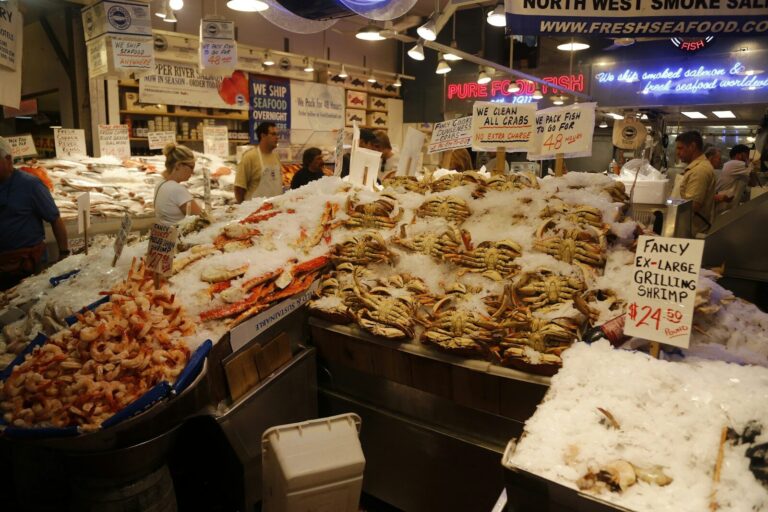
Revenue per pound depends entirely on your market. Catfish sold to a processing plant — the commodity market — brings $0.85 to $1.10 per pound depending on size and market conditions. Catfish sold whole at a farmers market or direct to restaurants can bring $3 to $6 per pound. Catfish sold as cleaned fillets to retail or restaurant customers brings $8 to $14 per pound. The difference between commodity and premium direct-market pricing is the difference between a financially marginal operation and a profitable one at small scale. Most small-scale fish farm operations cannot be profitable at commodity prices; they must access premium direct markets to generate the revenue that supports their higher per-unit production cost.
Break-Even Analysis
Calculate the minimum annual production volume required to cover your fixed costs — infrastructure depreciation, permits, insurance, property taxes — at your expected selling price. This break-even volume is the minimum scale at which your operation can survive financially. Then ask: is this production volume achievable with your available water and infrastructure? Is the market available to you capable of absorbing this volume at your target price? If the answer to either question is no, the operation as designed is not financially viable and needs to be redesigned — either lower fixed costs, access higher-price markets, or identify a larger market — before you commit capital to building it.